Skip to content
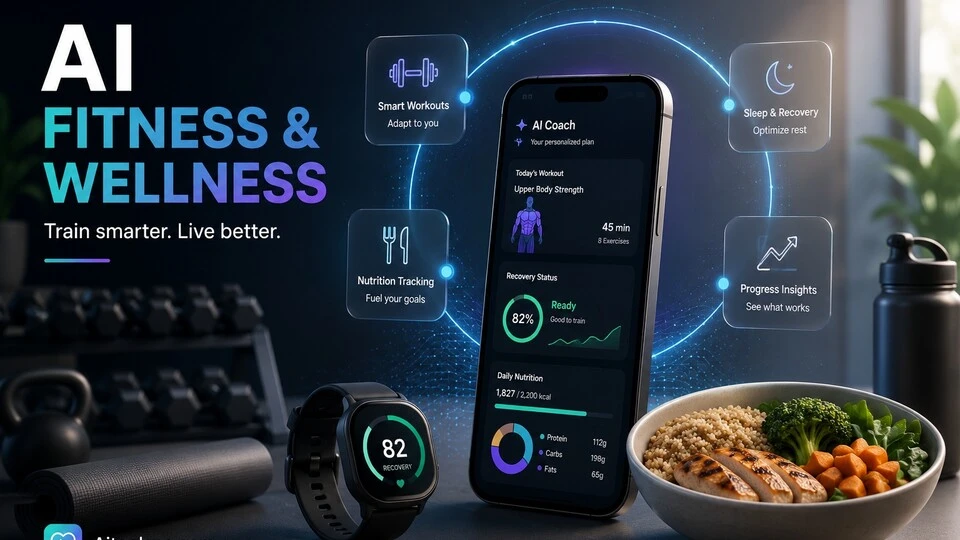
Best AI Tools for Fitness & Wellness (Train Smarter & Live Better in 2026)
Quick Navigation: How I Tested • Comparison Table • Risks • Best Tools • FAQ
Fitness is personal. What works for one person doesn’t work for another. A workout program designed for a 25-year-old athlete is useless for a 50-year-old desk worker with a bad knee. Generic training plans from magazines and YouTube ignore your body, your schedule, your limitations, and your goals. The result is that most people either follow programs that aren’t right for them or give up because the program doesn’t fit their life.
Personal trainers solve this by creating individualized programs — but quality trainers cost $60-150 per session, which puts consistent coaching out of reach for most people. AI fitness tools fill this gap by providing personalization at an accessible price point. They assess your fitness level, understand your goals and limitations, generate appropriate workout programs, adapt based on your progress, and provide the guidance that turns generic exercise into effective training.
The important caveat: AI fitness tools are not medical devices. They don’t diagnose conditions, prescribe rehabilitation, or replace professional medical advice. If you have injuries, chronic conditions, or health concerns, consult a healthcare provider before following any AI-generated program.
For personal trainers using AI in their business, Best AI Tools for Personal Trainers covers the professional coaching toolkit. For coaches more broadly, Best AI Tools for Coaches addresses the coaching business workflow.
Quick answer: Fitbod is the best AI-powered workout generator that adapts to your progress. Whoop is the strongest recovery and readiness tracker. MyFitnessPal with AI features remains the most practical nutrition tracking tool.
How I Tested These Tools
I evaluated each tool based on what matters for effective fitness:
- Personalization — does it create programs adapted to your level, goals, equipment, and limitations
- Adaptation — does it adjust based on your progress, not just repeat the same program
- Practical guidance — does it tell you what to do clearly enough that you can follow it without confusion
- Sustainability — does it promote sustainable habits rather than extreme approaches
- Integration — does it connect with wearables and other health tracking for a complete picture
I reviewed each tool’s features, tested the workout generation and tracking, and consulted feedback from fitness professionals and regular users. I did not fabricate fitness improvement statistics or invent health outcome claims.
Comparison Table
| Tool | Best For | Key Strength | Pricing |
|---|---|---|---|
| Fitbod | Adaptive workouts | AI generates workouts that adapt to your recovery and progress | Paid |
| Whoop | Recovery tracking | Continuous monitoring of strain, recovery, and sleep | Paid |
| MyFitnessPal | Nutrition tracking | Largest food database with AI meal suggestions | Freemium |
| TRAINER AI | Complete coaching | AI personal trainer with workout + nutrition programming | Paid |
| Apple Fitness+ | Guided workouts | High-quality guided workouts with Apple Watch integration | Paid |
| Claude | Custom programming | Personalized workout plans and fitness education | Freemium |
Best AI Tools for Fitness & Wellness
Fitbod — Best Adaptive Workout Generator
Fitbod generates personalized workouts that adapt to your body. It tracks which muscles you trained, how recovered each muscle group is, and what equipment you have access to — then generates the next workout based on what your body is ready for rather than following a fixed schedule.
What it does well:
- generates workouts based on muscle recovery status — training muscles that are recovered while resting those that aren’t
- adapts to your available equipment — generates effective workouts whether you have a full gym or just dumbbells at home
- learns from your training history — as you get stronger, the AI increases intensity, volume, and complexity appropriately
- tracks sets, reps, and weight for every exercise so progress is visible over time
- provides exercise instruction with video demonstrations for each movement
Where it falls short: Fitbod generates individual workouts well but doesn’t provide the structured periodization that serious strength training programs require — the planned progression across weeks and months that optimizes long-term progress. The workout generation favors variety over consistency, which is good for general fitness but less effective for specific goals like powerlifting or bodybuilding. The AI doesn’t observe your form, so it can’t correct movement patterns that increase injury risk. And the nutrition side is minimal — you need a separate tool for diet management.
Best for: people who want effective, personalized workouts without hiring a trainer — especially those who train with varied equipment or split time between gym and home workouts.
Whoop — Best for Recovery Tracking
Recovery is where fitness progress actually happens — muscles rebuild, the nervous system adapts, and the body gets stronger between workouts, not during them. Whoop continuously monitors your body’s recovery status through heart rate variability, resting heart rate, sleep quality, and respiratory rate — telling you whether your body is ready for hard training or needs rest.
What it does well:
- monitors recovery continuously through HRV, resting heart rate, sleep stages, and respiratory rate
- provides a daily recovery score that indicates whether your body is ready for intense training or needs lighter work
- tracks strain during workouts and daily activity to quantify how much stress your body is experiencing
- analyzes sleep in detail — duration, efficiency, stages, disturbances — with recommendations for improvement
- identifies patterns between behaviors (alcohol, caffeine, late meals, screen time) and recovery outcomes
Where it falls short: Whoop tracks recovery but doesn’t generate workouts — it tells you how hard to train today, not what exercises to do. The subscription model (no upfront device cost but ongoing monthly fee) adds up over time. The data can create anxiety — obsessing over daily recovery scores adds mental stress that contradicts the wellness purpose. Individual readings can be influenced by factors the device doesn’t track (stress, illness, hydration), making any single day’s score potentially misleading. And Whoop’s value is primarily for people who train regularly — casual exercisers don’t need this level of recovery monitoring.
Best for: people who train seriously (4+ days per week) and want objective data about whether their body is recovered enough for hard training — athletes, CrossFitters, and committed fitness enthusiasts.
MyFitnessPal — Best for Nutrition Tracking
Nutrition is the foundation of both fitness results and general wellness. MyFitnessPal provides the largest food database and the most practical calorie and macro tracking, with AI features that suggest meals, identify nutritional patterns, and make logging food as simple as possible.
What it does well:
- provides the largest food database with barcode scanning — logging meals is fast and accurate for packaged foods
- AI suggests meals based on your nutritional targets and food preferences
- tracks macronutrients (protein, carbs, fat) alongside calories for detailed nutritional awareness
- identifies patterns in your eating habits — when you tend to overeat, which meals are nutritionally weak, what you’re consistently missing
- integrates with fitness trackers and workout apps for a combined view of calories consumed and burned
Where it falls short: Food logging requires consistent effort — even with barcode scanning and AI suggestions, tracking every meal every day is tedious and many people stop after a few weeks. Restaurant meals and homemade recipes are harder to log accurately than packaged foods. The calorie counts in the database aren’t always accurate — user-submitted entries can be wrong. And strict calorie tracking can promote an unhealthy relationship with food for some people, turning eating from an enjoyable activity into an anxious calculation.
For personal finance tracking with similar discipline, see Best AI Tools for Personal Finance.
Best for: people with specific nutrition goals (weight loss, muscle gain, athletic performance) who need detailed tracking to understand and control their intake — especially during the initial phase of learning what and how much they eat.
TRAINER AI — Best for Complete AI Coaching
TRAINER AI provides a comprehensive AI personal trainer — combining workout programming, nutrition planning, and progress tracking in one platform. Unlike single-purpose tools (Fitbod for workouts, MyFitnessPal for nutrition), TRAINER AI coordinates both sides of the fitness equation.
What it does well:
- generates both workout programs and nutrition plans based on your goals, schedule, and preferences
- adapts training volume and intensity based on your logged performance and recovery feedback
- coordinates nutrition with training — adjusting intake recommendations on training days versus rest days
- provides progressive programming that builds across weeks, not just isolated daily workouts
- includes exercise video demonstrations and form guidance
Where it falls short: All-in-one tools face the challenge of depth versus breadth. TRAINER AI’s workout programming may not match dedicated tools like Fitbod for variety, and its nutrition tracking may not match MyFitnessPal for database size and food logging convenience. The AI coaching, while personalized, can’t observe your form or make the real-time adjustments a human trainer makes. And AI programming follows patterns that work for most people — if you have unusual needs, limitations, or goals, a human trainer who understands your specific situation may produce better results.
For professional trainers, see Best AI Tools for Personal Trainers.
Best for: people who want a single AI tool managing both workouts and nutrition — especially beginners who benefit from having both sides coordinated.
Apple Fitness+ — Best for Guided Workouts
Apple Fitness+ provides high-quality, professionally produced guided workout classes that integrate with Apple Watch data. The AI personalization comes through workout recommendations based on your activity history, fitness level, and preferences — suggesting workouts that are appropriate for you rather than requiring you to browse through a catalog.
What it does well:
- provides high-quality, professionally produced workout videos across dozens of workout types
- integrates with Apple Watch to display real-time metrics during workouts (heart rate, calories, activity rings)
- AI recommends workouts based on your history, fitness level, and what you haven’t done recently
- includes meditation, yoga, and recovery content alongside strength and cardio — addressing wellness broadly
- new content added regularly so the library stays fresh
Where it falls short: Apple Fitness+ requires Apple Watch — it’s locked into the Apple ecosystem. The guided classes follow the instructor’s programming, which limits personalization — everyone in the class does the same workout. The AI recommends which class to take but doesn’t modify the class to your specific level or limitations. The workouts are designed for general fitness, not for specific athletic goals or advanced training. And the subscription cost adds to the Apple Watch and iPhone investment.
For learning new skills beyond fitness, see Best AI Tools for Learning New Skills.
Best for: Apple Watch users who prefer guided, instructor-led workouts and want a broad variety of exercise types — especially those who value production quality and enjoy following along with an instructor.
Claude — Best for Custom Programming and Education
Claude handles the thinking side of fitness — creating customized workout programs, explaining exercise science, answering training questions, and helping you understand the principles behind effective training. For people who want to understand their fitness rather than just follow instructions, Claude provides education alongside programming.
What it does well:
- creates customized workout programs based on your specific goals, schedule, equipment, and limitations
- explains the reasoning behind training recommendations — why this exercise, why this volume, why this progression
- answers fitness and nutrition questions with nuanced, balanced information rather than absolutist claims
- adapts programs when circumstances change — travel, injury recovery, schedule disruption, new goals
- provides context and education that helps you make better training decisions independently
Where it falls short: Claude can’t see you exercise, monitor your heart rate, or track your recovery. It creates programs based on what you describe, not on what it observes. The training recommendations are based on general exercise science principles, not on your specific physiological responses. And Claude should not be used as a substitute for professional medical advice — if you have injuries, chronic conditions, or health concerns, see a qualified professional.
For broader coaching workflows, see Best AI Tools for Coaches.
Best for: people who want to understand their training, not just follow instructions — especially those creating their own programs who want expert guidance on programming decisions.
The Real Risks of AI in Fitness
1. Generic Programming Causing Injury
AI generates workouts based on what works for most people. But you aren’t most people. If you have a shoulder impingement and the AI programs overhead pressing, or a knee issue and the AI programs deep squats, you’re training into an injury. Always inform AI tools about your limitations and injuries, and consult a professional if you’re unsure whether an exercise is safe for your body.
2. Data Obsession Undermining Wellness
Fitness trackers that quantify everything — steps, sleep, recovery, calories, macros — can turn health pursuits into anxious number-watching. When your recovery score determines your mood and your calorie count determines your self-worth, the tracking that’s supposed to promote wellness is undermining it. Use data as information, not as judgment.
3. AI Replacing Medical Advice
AI fitness tools are not medical devices. They don’t diagnose conditions, can’t assess movement quality visually, and shouldn’t guide rehabilitation from injuries. The line between “fitness advice” and “medical advice” isn’t always clear — and AI tools tend to provide general recommendations that may not be appropriate for your specific health situation. When in doubt, consult a qualified professional.
4. Unsustainable Approaches Presented as Optimal
AI can generate aggressive workout programs and restrictive nutrition plans that produce fast results but aren’t sustainable. Extreme approaches work temporarily and then fail — the most effective fitness strategy is the one you can maintain consistently for years, not the one that produces the fastest results for weeks.
Which AI Tool Should You Choose?
- Adaptive daily workouts → Fitbod (AI-generated workouts based on recovery and progress)
- Recovery and readiness → Whoop (continuous monitoring of recovery status)
- Nutrition tracking → MyFitnessPal (largest food database with AI meal suggestions)
- Complete AI coaching → TRAINER AI (workout + nutrition in one platform)
- Guided workout classes → Apple Fitness+ (high-quality classes with Apple Watch integration)
- Custom programming → Claude (personalized programs with education and reasoning)
Best starting approach: Start with what matters most for your goal. Weight loss → MyFitnessPal for nutrition awareness. Strength → Fitbod for progressive training. General fitness → Apple Fitness+ for guided variety. Serious training → add Whoop for recovery management. Use Claude when you want to understand the why behind your training.
Frequently Asked Questions
What is the best AI fitness app?
Fitbod is the best for adaptive weight training. MyFitnessPal is best for nutrition tracking. Whoop is best for recovery monitoring. Apple Fitness+ is best for guided classes. The right choice depends on whether your priority is workout programming, nutrition, recovery, or guided instruction.
Can AI replace a personal trainer?
For basic programming and progress tracking, yes — AI tools provide personalized workouts that adapt to your progress. For form correction, injury management, motivation during workouts, and the accountability that comes from a human relationship, personal trainers still provide value that AI can’t match. AI is most useful for people who can exercise independently but need intelligent programming.
Is AI fitness advice safe?
For generally healthy people following AI-generated workout programs, yes — the programming follows established exercise science principles. For people with injuries, chronic conditions, or health concerns, AI fitness advice should supplement professional guidance, not replace it. Always inform AI tools about your limitations and consult a professional when unsure.
How do I track nutrition without obsessing?
Track for education, not perfection. Use MyFitnessPal for 2-4 weeks to understand your eating patterns — what you typically eat, where your nutrition gaps are, and how your intake relates to your goals. Then transition to intuitive eating informed by what you learned. Not everyone needs to track indefinitely.
Do I need a fitness tracker?
A fitness tracker adds useful data (heart rate, activity level, sleep quality) but isn’t required for effective training. If you enjoy data-driven approaches, trackers enhance your training information. If data feels stressful or obsessive, you can train effectively without one. The best training approach is the one you’ll follow consistently.
How much do AI fitness tools cost?
Fitbod and TRAINER AI cost around $10-15/month. MyFitnessPal’s premium features cost about $10/month (free version is functional). Whoop costs $30/month with no upfront device cost. Apple Fitness+ costs $10/month. Most people need one or two tools — total monthly cost of $10-30 for AI-powered fitness coaching.
Related AI Tools Guides
- Best AI Tools for Personal Trainers
- Best AI Tools for Coaches
- Best AI Tools for Learning New Skills
- Best AI Tools for Personal Finance
- Best AI Productivity Tools
Explore all AI tools → Browse by profession and use case
Last updated: June 2026